Practical steps to declutter a small flat ahead of new tenants
If you're getting a compact flat ready for new tenants, decluttering is one of those jobs that looks simple on paper and then quietly eats your afternoon. One spare shelf, a couple of forgotten boxes, a random chair in the corner... and suddenly the place feels smaller than it is. The good news is that the right practical steps to declutter a small flat ahead of new tenants can make the whole property feel cleaner, brighter, and easier to let without turning the process into a full-blown upheaval.
In this guide, we'll walk through a sensible, room-by-room approach that helps you clear out the right things, avoid common mistakes, and prepare the flat for handover with less stress. You'll also find a checklist, a comparison of disposal options, and a few real-world tips that matter when space is tight and time is even tighter.
Why Practical steps to declutter a small flat ahead of new tenants Matters
A small flat shows everything. There's nowhere for visual clutter to hide, which is why even a few extra items can make a room feel cramped, dark, or oddly unfinished. Before new tenants move in, decluttering is not just about being tidy. It's about setting the property up so it feels usable, welcoming, and easier to maintain from day one.
For landlords, letting agents, and property managers, this is especially important in compact London flats where storage is often limited and every square metre has to work hard. A cleared hallway gives a better first impression than a pile of boxes. A kitchen without random kitchen gadgets stacked on the worktop feels more spacious. A bedroom with a clean wardrobe and empty bedside surfaces looks calmer. Simple things, really, but they add up fast.
There's also a practical side. Decluttering before new tenants arrive helps you spot damage, clean properly, and remove items that could get in the way of checks, photos, or maintenance. If a smoke alarm needs testing, or a radiator valve needs access, you don't want to be moving three bags of old stuff out of the way first. Been there, not fun.
Expert takeaway: In a small flat, decluttering is not a nice extra. It is part of making the home ready to let well, because space, cleanliness, and accessibility are all linked.
How Practical steps to declutter a small flat ahead of new tenants Works
The process works best when you treat it as a simple sequence rather than a giant one-off clean-out. Start by deciding what must stay, what must go, and what needs sorting separately. That means separating landlord belongings, abandoned tenant items, rubbish, reusable furniture, and anything that might need specialist disposal.
In practice, the most efficient approach is usually this: clear visible clutter first, then deal with hidden storage, then remove bulky items, and finally do a last tidy and clean. Why this order? Because small flats often have awkward storage spots: under-bed spaces, built-in cupboards, top shelves, the box room-that-isn't-really-a-room. If you begin there, the flat can look messier for longer. Better to get the obvious stuff out of sight early so progress feels real.
It also helps to think in zones. A studio flat can be tackled as separate zones for sleeping, cooking, sitting, and storage. A one-bedroom flat can be handled room by room. Even if the space is tiny, breaking it into zones reduces decision fatigue. You will notice this almost immediately; it's much easier to say "this shelf is finished" than "the whole flat is somewhere between chaos and sorted".
If any larger items need to be removed, such as an old sofa, bed frame, or white goods, it is worth planning those collections in advance. For some properties, a service like flat clearance can be a practical way to clear space quickly without dragging furniture through narrow communal hallways on your own.
Key Benefits and Practical Advantages
Decluttering a small flat ahead of new tenants is not just about appearances. It gives you a cleaner handover, a better chance of identifying maintenance issues, and fewer awkward surprises after move-in. Truth be told, this is one of those jobs that pays you back in several ways at once.
- Better first impressions: A sparse, clean flat feels bigger and more inviting.
- Easier deep cleaning: Cleaners can work properly when surfaces and floors are clear.
- Fewer disputes later: You're less likely to leave behind items tenants did not expect.
- Improved access: Radiators, sockets, windows, and stopcocks are easier to reach.
- Faster maintenance checks: Small repairs and safety checks become simpler.
- Better listing photos: If you are re-marketing the property, clean space photographs well.
There's also a subtle rental-value angle. A well-prepared flat tends to feel more cared for, and that matters. New tenants usually read the condition of a home very quickly. If the place feels tight, cluttered, or half-finished, it can create doubt. If it feels calm and uncluttered, it signals proper management. That matters more than people admit.
One small but useful effect: decluttering often reveals what you do not need to replace. Sometimes a room looks "tired" simply because it's overloaded. Remove the extra bits and the space itself improves. Funny how that works.
Who This Is For and When It Makes Sense
This guidance is for anyone preparing a compact rental property for new occupants. That includes private landlords, build-to-rent operators, letting agents, estate managers, and even family members helping sort out a flat between tenancies. It is especially relevant if the property has limited storage, shared access, narrow stairs, or very little outdoor space for staging items.
It makes sense to declutter when:
- the previous tenant has left belongings behind;
- the landlord has stored spare furniture or appliances in the flat;
- you need to re-photograph the property for marketing;
- repairs or decorating are easier once the space is empty;
- the flat feels overcrowded, even if technically it is "tidy".
It also makes sense when you are dealing with a short turnaround. In London especially, end-of-tenancy windows can be tight. If one tenancy ends on a Thursday and viewings begin by Saturday, you may have very little room to breathe. In that situation, decluttering is as much about logistics as it is about tidiness.
If you need help with additional household or mixed property items, it can be worth looking at related services such as home clearance or waste removal, depending on what needs to leave the property.
Step-by-Step Guidance
Below is a practical, sensible way to clear a small flat without making it harder than it needs to be. Keep it orderly. No heroics required.
1. Start with a quick walk-through
Walk through the flat and note every area that feels crowded, blocked, or visually messy. Look inside cupboards, under sinks, behind doors, and around radiators. Take a few photos if it helps. A phone camera can be useful here because it shows clutter more honestly than your memory does.
2. Decide what must stay
Separate the essentials from the rest. In a rental property, the essentials are usually fixtures, agreed furniture, working white goods, and any items needed to meet the tenancy setup. If something is not needed for the next tenant, does not belong to the landlord, and has no obvious use, it should probably be removed.
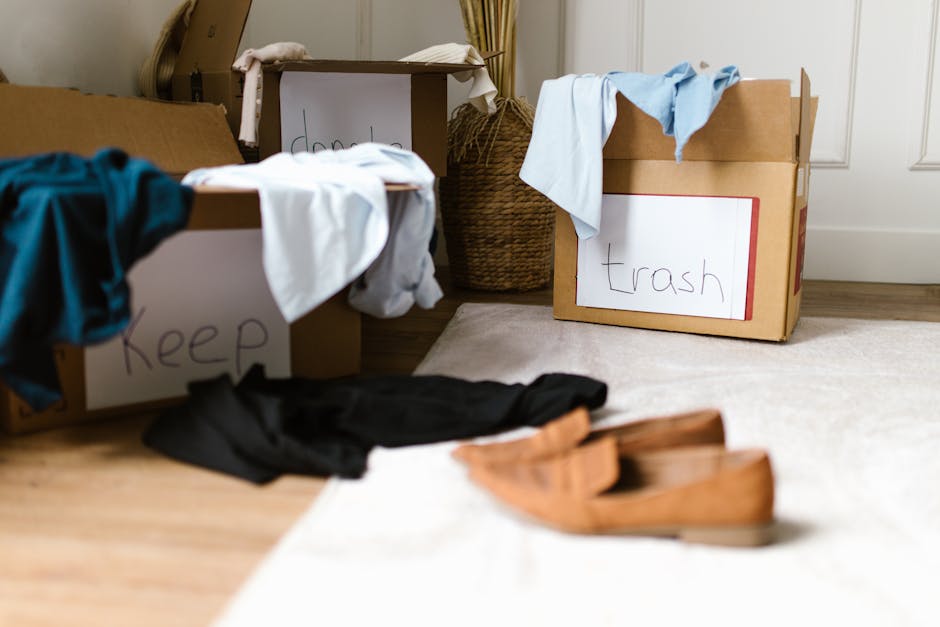
3. Use four clear categories
Keep your sorting simple:
- Keep - items that stay with the flat.
- Remove - items that should be cleared out.
- Recycle - items suitable for responsible recycling.
- Dispose - broken or unusable items for waste removal.
Four categories is enough. Any more and the process starts to wobble a bit, especially in a small space.
4. Clear the main living space first
Start with the room tenants will see first. Usually that means the living room or the main studio area. Remove extra chairs, forgotten storage boxes, old magazines, spare electronics, and anything that breaks the sense of open space. If a sofa is damaged or simply too large for the room, it may be worth arranging a sofa removal or sofa collection rather than trying to wrestle it through the hall yourself.
5. Deal with the bedroom and storage zones
Bedrooms in small flats often double as storage rooms, which is where things get messy. Empty wardrobes of anything not intended for the new tenancy. Check under the bed, on top of cupboards, and inside bedside drawers. If the flat includes a bed that needs removing, a specialist bed disposal or mattress disposal service can save a lot of hassle.
6. Clear the kitchen properly
Kitchens collect odd bits. Mugs without matching sets, half-empty cleaning bottles, old utensils, duplicate pans, expired food, and the inevitable drawer of mystery cables. Remove anything not needed for the tenancy and leave only a sensible, usable setup. If a fridge is being replaced or taken away, a fridge disposal or white goods recycle option may be appropriate.
7. Tackle the bathroom and utility nooks
Bathrooms in compact flats often end up holding cleaning products, spare toiletries, forgotten bins, and old storage baskets. Remove all personal items and anything that creates visual clutter. Check the airing cupboard, boiler space, and under-sink storage. Small spaces need to breathe, even if they're not exactly glamorous. Especially if they're not glamorous.
8. Remove bulky waste in one go where possible
Once everything has been sorted, group the bulky items together and arrange removal efficiently. If there are large mixed items, compare options for bulky waste collection, large item collection, or furniture disposal. The right method depends on the size, weight, and condition of the items.
9. Finish with a final surface clear and clean
Once the clutter is out, go back through the flat and clear surfaces completely. Wipe shelves, skirting boards, inside cupboards, and window ledges. That final pass matters. A flat can look technically empty but still feel untidy if there's dust, packaging residue, or one lone screwdriver on the kitchen counter. You know the sort of thing.
Expert Tips for Better Results
Here are a few practical tips that make the whole job smoother, particularly in tighter flats where every inch of floor space matters.
- Work top-down: Start high shelves and cupboards first, then move to surfaces and floors. It stops you from re-cluttering cleared areas.
- Use clear bags or labelled boxes: It sounds small, but it speeds up sorting and avoids confusion when different people are helping.
- Measure bulky pieces before removal: Narrow stairwells and tight front doors can turn a simple job into an awkward one.
- Book collections before the final clean: Otherwise you may need to clean twice. Nobody wants that.
- Keep one "essentials" box for the tenancy: Keys, manuals, spare bulbs, and appliance instructions can all live together neatly.
- Take before-and-after photos: Useful for property records, handovers, and peace of mind.
One practical bit of advice from real-world experience: if you are unsure whether an item should stay, put it aside and revisit it after twenty minutes. A small pause often makes the answer obvious. Funny how clutter gets louder when you stop staring at it.
Another useful habit is to keep the exit route clear from the start. In tiny flats, people tend to build little piles in the hallway while sorting. That just blocks movement and makes the flat feel worse than it is. Leave yourself a clear path. It saves a headache later.
Common Mistakes to Avoid
Decluttering a small flat is simple in theory, but a few predictable mistakes can make it harder than it needs to be.
- Starting without a disposal plan: If you do not know where things are going, the piles just migrate around the flat.
- Keeping too much "just in case": Spare chairs, broken appliances, and tired storage baskets rarely become useful later.
- Forgetting hidden spaces: Cupboards, loft hatches, and under-bed storage often contain the worst surprises.
- Mixing useful items with waste: That makes sorting slower and can lead to accidental disposal of something important.
- Leaving bulky items until the last minute: Large furniture can block cleaning and final checks.
- Overfilling communal bins: This creates problems in shared buildings and can upset neighbours, which is the last thing you need.
The biggest one is emotional attachment to things that belong in the property but no longer serve it. A flat that is ready for new tenants is not a storage unit. Harsh, maybe, but true.
Tools, Resources and Recommendations
You do not need a van-load of equipment to declutter a small flat, but a few basics make the process quicker and less chaotic.
- Strong bags and boxes: For sorting and moving items safely.
- Labels or marker pens: Keep categories clear, especially if several people are helping.
- Gloves: Handy for dusty cupboards, sharp edges, or awkward old storage items.
- Tape measure: Useful for checking whether furniture is worth keeping or removing.
- Basic cleaning supplies: Cloths, spray, dustpan and brush, and a vacuum for the final pass.
- Phone camera: Great for documenting the state of the flat before and after.
For disposal and clearance support, it helps to understand the difference between rubbish removal, waste clearance, and furniture clearance. In simple terms, rubbish removal covers mixed waste, waste clearance is broader, and furniture clearance is best when the main task is getting rid of bulky household items. If you are clearing multiple rooms at once, house clearance can be more practical than arranging several separate collections.
Law, Compliance, Standards, or Best Practice
When preparing a rental flat, it is sensible to follow legal and industry best practice around waste disposal, safety, and property handover. That does not mean every declutter job is legally complex. It usually is not. But it does mean you should avoid fly-tipping, use proper disposal routes, and respect building rules in shared blocks.
In the UK, landlords and agents should be careful about leaving waste in communal areas, blocking exits, or disposing of items through unsuitable channels. If items contain electrical components, refrigerants, or other specialist materials, they may need separate handling. That includes things like fridges, freezers, and certain large appliances. If you are not sure, treat them cautiously and check the disposal route first.
Best practice also includes keeping records of what was removed, especially between tenancies. Simple notes and photos can help if there is later confusion about what belonged to the property. In managed buildings, you may also need to follow access rules for lifts, loading bays, or shared rubbish stores. Not the most exciting part of the job, admittedly, but it matters.
It is also sensible to check your own insurance and safety expectations if lifting heavy items, using contractors, or allowing teams into occupied or partially occupied buildings. If a piece of furniture looks unstable or awkwardly heavy, let trained removal staff handle it rather than improvising with a neighbour and a vague plan. That way lies regret.
Options, Methods, or Comparison Table
There is no single best way to clear a small flat. The right choice depends on how much needs to go, how quickly the flat must be ready, and whether items are reusable or simply waste. Here's a straightforward comparison.
| Method | Best for | Advantages | Limitations |
|---|---|---|---|
| DIY decluttering | Small volumes, light items, generous time | Low direct cost, full control | Time-consuming, awkward for bulky items, more lifting |
| Bulky item collection | Sofas, mattresses, large furniture, single heavy items | Simple for one-off large pieces | Less suitable for mixed-room clearances |
| Full flat clearance | Multiple rooms, abandoned items, urgent turnaround | Fast, efficient, ideal for tight deadlines | Usually more expensive than doing part of it yourself |
| Council collection route | Some large household items, where available and suitable | Can be a practical option for certain items | Availability, item limits, and timing can be restrictive |
For a compact rental flat, the most practical route is often a mix: sort yourself, remove light items, and use a professional collection for the awkward bits. That combination tends to save time without wasting money.
Case Study or Real-World Example
Imagine a one-bedroom flat in West London after a long tenancy. The bedroom has an old ottoman bed, a mattress, a broken side table, two storage boxes full of mixed paperwork, and a wardrobe shelf that is basically a museum of spare cables. The living room has a worn two-seater sofa, a chipped coffee table, and a few random items left in corners. The kitchen has a stack of duplicate pans, a broken toaster, and a fridge that is still in place but not worth keeping.
Instead of trying to tackle the whole place in one go, the flat is divided into zones. First, the obvious loose clutter is bagged. Next, drawers and cupboards are emptied and sorted. Then the bulky furniture is moved for collection. Finally, the property is cleaned with the surfaces fully clear. The result is not just a tidier flat. It feels larger, brighter, and far easier for new tenants to imagine living in.
That is the real shift, isn't it? Not "less stuff" for the sake of it, but a home that feels ready.
In this kind of job, services like bulk waste collection or large item collection can be especially useful when there is more than one awkward item and the building access is tight. If the flat also needs general clearance before new occupants arrive, a broader option such as flat clearance can keep the process simple.
Practical Checklist
Use this checklist as a final sweep before the new tenants arrive.
- All landlord and previous-tenant belongings have been removed.
- Wardrobes, cupboards, and under-bed storage have been checked.
- Broken furniture has been separated from usable items.
- Bulky items have been booked for removal or collection.
- Kitchen counters and storage areas are clear.
- Bathrooms are free from personal items and old products.
- Hallways and exits are unobstructed.
- Any electrical or specialist items are handled appropriately.
- Floors, skirting boards, and surfaces have been cleaned.
- Keys, manuals, and essentials are organised for handover.
- Photos have been taken for records, if needed.
Quick summary: If the flat feels easier to walk through, easier to clean, and easier to inspect, you are probably on the right track.
Get a free quote today and see how much you can save.
Conclusion
Practical steps to declutter a small flat ahead of new tenants are really about creating space, clarity, and a smoother handover. Start with the visible clutter, sort the hidden storage, remove bulky items in a planned way, and finish with a proper clean. Keep the process simple, and the flat stops feeling like a storage problem and starts feeling ready for someone new.
If you've been putting it off, that's understandable. Small flats can be awkward, and clutter has a sneaky way of multiplying when you're busy. But once you begin, the job usually gets easier quite quickly. One clear corner leads to another. One cleared cupboard makes the next decision simpler. Before long, the flat feels lighter. And that's a good feeling.
Take it one zone at a time, keep the exit route clear, and don't be afraid to ask for help with the heavy lifting. A calm, uncluttered flat gives new tenants a better start, and it gives you a cleaner, more professional handover too. A proper reset, really.
Frequently Asked Questions
What is the best way to declutter a small flat before new tenants move in?
The best way is to work in zones, sort items into clear categories, and remove bulky pieces early. In a small flat, the order matters as much as the effort.
How far in advance should I start decluttering?
Ideally, start as soon as the outgoing tenancy ends or once access is possible. If the flat needs cleaning, repairs, or photos, giving yourself a little lead time helps a lot.
What should be removed first from a small rental flat?
Start with loose clutter, personal items, and anything blocking access. After that, move to cupboards, wardrobes, and bulky furniture.
Do I need a full clearance service for a one-bedroom flat?
Not always. If there are only a few items to remove, a targeted furniture or bulky waste collection may be enough. If the flat is full or time is tight, full flat clearance can be more practical.
How do I decide whether to keep or remove an item?
Ask whether the item is needed for the new tenancy, fits the space well, and is in good enough condition to stay. If the answer is no to two or more of those, it probably should go.
Can I leave items in communal areas while I sort the flat?
It is better not to. Shared hallways and entrances can cause access problems and complaints, especially in apartment blocks. Keep the route clear and move items out responsibly.
What happens to furniture that is still usable?
Usable furniture may be collected separately through furniture clearance or moved into reuse or recycling routes, depending on condition and the service you choose.
Are fridges and mattresses treated differently from normal waste?
Often, yes. Fridges, mattresses, and other large household items can need specialist handling or separate collection methods, so it is worth arranging the correct disposal route.
How do I prepare a flat for new tenants if storage space is very limited?
Use temporary staging areas only if they do not block access, then remove items quickly in batches. In very tight flats, it is often easier to clear one room completely before starting the next.
Is it worth taking photos before and after decluttering?
Yes, especially for landlord records, agent handovers, or dispute prevention. It only takes a few minutes and can save confusion later.
What is the difference between rubbish removal and furniture clearance?
Rubbish removal usually covers mixed waste, while furniture clearance focuses on larger household items like sofas, tables, or beds. The right option depends on what needs to leave the property.
Can decluttering help the flat rent faster?
A clear, uncluttered flat usually photographs better and feels more spacious in viewings. That does not guarantee a faster let, of course, but it does help the property present well.
Should I handle all the decluttering myself?
Only if the items are light, the access is easy, and you have enough time. For heavier furniture or a full flat clearance, using professional help is often the safer and simpler choice.